
Who are the Immigrants?

Are you an immigrant? I thinkcustomsofficer so.

For some people, Immigration is actually quite complex. I am a Canadian citizen but my mother is a U.S. citizen. My official classification in the U.S. is Permanent Resident (A visitor who plans to stay). My mother met and married my father, and moved to Canada when she was 18. The immigration law affecting my status says that she had to live in the U.S. until she was 19 to pass on citizenship to her children. To live in the U.S., my wife became my sponsor for my Permanent Resident application.

It gets more complex. Not only is my mother a U.S. citizen, she is also a member of the Chippewa Nation, a Native American tribe in the United States. We are both official members of the tribe. This suggests that my lineage in this land precedes the European immigration. The tribal law, however, is subject to U.S. law, so this does not give me any different status in the U.S.

Now in the current age of DNA testing, my family has discovered that my mother’s DNA actually shows that her family came from Peru. Sometime in history, my mother’s ancestors emigrated from South America just like my father’s family came from Europe.

There is more. I am a Christ-Follower and member of a Christian faith community. A verse from the New Testament that means a lot to me is Philippians 3:20. It says, “But our citizenship is in heaven, and it is from there that we are expecting a Savior, the Lord Jesus Christ.” I have a complicated immigration status and this verse gives me hope, something to believe in when political arguments about immigration make me weary.

The hope that I have includes a belief in hospitality, a welcoming spirit. I believe that everyone who comes here either before or after his or her birth is basically a traveler on earth. Our time in this place is finite. I prefer to live into a legacy of welcome and sharing than to build walls that do more to imprison than they do to protect.

So who are the immigrants? We all are. You’re welcome.
JFK’s Call for Peace to Celebrate his Birthday, May 29.

At American University’s Commencement on June 10, 1963, John F. Kennedy asks about the kind of peace we seek. His view is that we seek a peace that is not like that of the grave or the slave. He says “I am talking about genuine peace, the kind of peace that makes life on earth worth living, the kind that enables men and nations to grow and to hope and to build a better life for their children…” I can get behind that. Watch 2 minutes of this speech and think about how you can help make this come true for you, me, and our children.

JFK Commencement Speech, American University, June 10, 1963

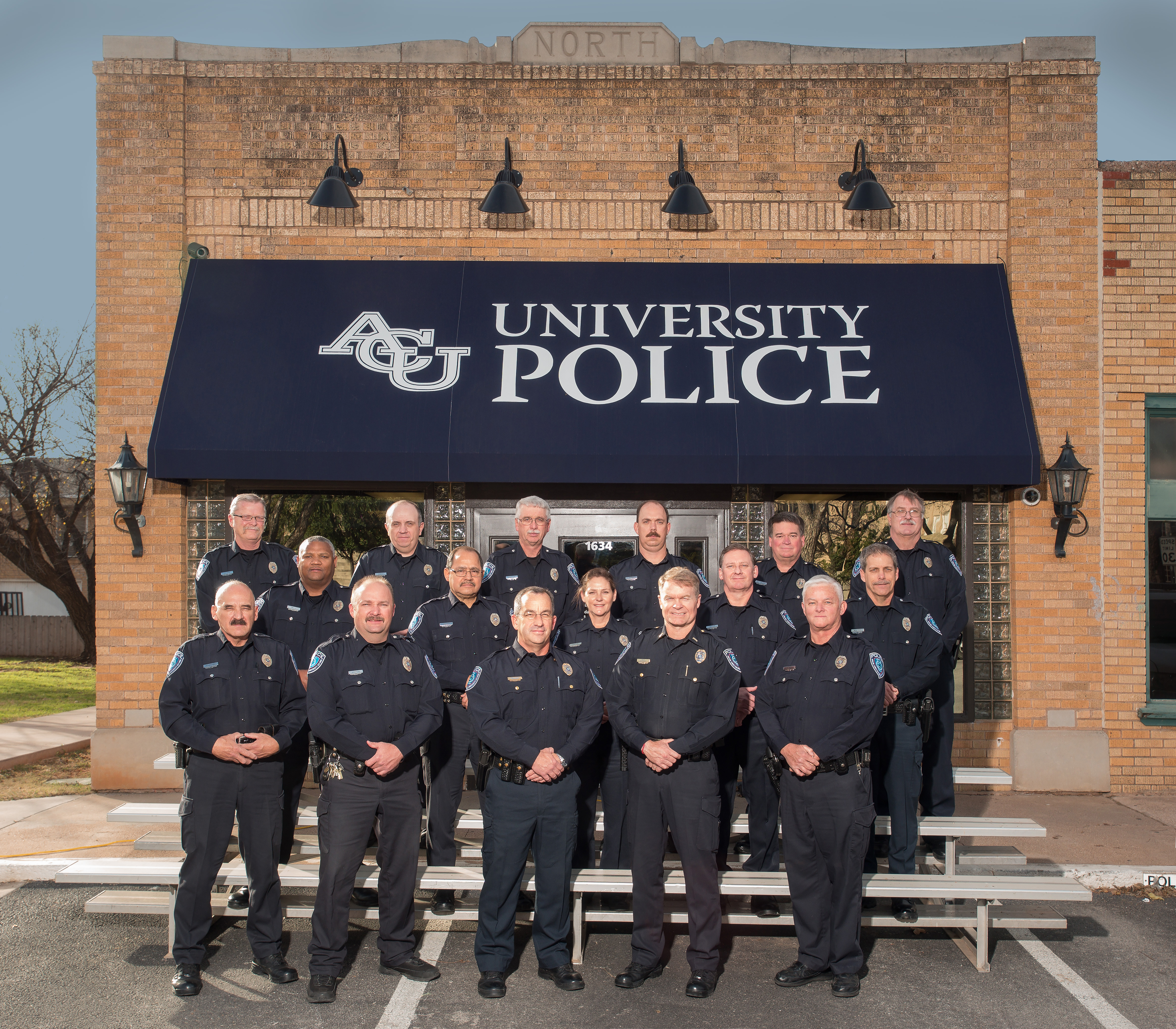
It’s the Police!

What does the phrase OLYMPUS DIGITAL CAMERA“It’s the police” mean to you? Do you react with a sense of safety and security, or tension and worry? This is a divisive issue. If you read the following, I hope you will see that I don’t take sides. I do, however, want to recognize good community relations when I see them.

People working various communication channels can be pretty good at providing meaningful sound bites that help people take sides. Some phrases related to police activity lately are “Black Lives Matter,” and “I Can’t Breathe.” We also know what it means when people raise both hands.

Police across the country have a heightened security problem and a public relations problem. Just as it is so sad that people have died by the hands of police lethal force, it is also so sad that police are targeted and killed in retribution.

Free speech is a good thing. Peaceful protesting of injustice is a good thing. Unjust lethal force is bad. Rioting, looting, and targeting police for retribution are also bad. These statements are true. But, what do we do now?

I think I know at least one thing we can do. We can come together as partners. While the news about police and problems in some communities has been negative, there are communities where police and citizens are proactive with positive solutions. The ACU Police Department primarily serves a university community but it is responsible for serving a section of our whole city. As the university wraps up the school year, the Chief of Police at ACU writes to his partners about some important topics he wants to address. The following email was sent to these partners. As you read, you should notice that he is addressing 5,000 partners including faculty, staff, students, and neighborhood citizens. To shorten the email, I left out a segment on parking issues and leaving bikes on campus. The language was the same throughout the email, though, and I share it here with his permission.

The Chief writes:

========================================================

Dear ACU community,

THANKS FOR YOUR HELP THIS YEAR:
The semester has drawn to a close and the ACU Police Department (ACUPD) wants to thank everyone for their patience, flexibility, and compliance during a 2014-15 school year filled with significant construction and special event related parking related closures, detours, and directives.

SUMMER SAFETY :
If you are here this summer, please continue to partner with ACUPD in keeping the campus and neighborhoods safe. Remember that our campus becomes even more vulnerable to crime during summer breaks because we lose many of our 5,000 partners. If you stay this summer, stay alert and always call ACUPD when you see something suspicious.

CONGRATS TO GRADUATES:
And finally, if you are a graduating senior, please accept our congratulations and our thanks for entrusting ACUPD with the awesome responsibility of keeping you and the campus safe during your years at ACU. We work hard to provide the ACU community with 24/7 law enforcement services delivered by a dedicated and professional team of officers and staff. You have deserved it, your parents have expected it, and we hope we have delivered it.

Sincerely,
Chief of Police
ACU Police Department

========================================================

I’m okay with being considered a partner. And I sense a good degree of satisfaction on campus with safety and security. I don’t think anyone would claim perfection in the system, however, this community has a healthy degree of ethnic diversity and does very well to keep a positive relationship between police and citizens.

I wish police departments across the country could realistically speak about their community citizens and neighbors as partners for safety and security.

And, I thank you, ACU Chief, for partnering with your community.

Soul Series: Soul Survivor

We spend a lifetime in soul formation, becoming who we really are. Yet the sad reality is that some of us unthinkingly sell our soul for things we don’t really care about.

I remember sitting way up on a mountainside in Papua New Guinea, in awe of the great beauty before me. I was 19 years old, spending a year as a missionary on the opposite side of the globe from the life I knew, and I was learning about a whole new world. Before me was a beautiful valley with small huts scattered around and families sitting in them gathered around their fires. There was no doubt in my mind that all of this was from the hand of God. Looking out over the valley below, however, I wrestled with competing ideas.

mountain in pngAfter my yearlong mission, I planned on going to college. Friends, however, warned me that college caused a lot of people to lose their faith in God. I couldn’t fathom how knowledge and education would lead me away from believing in God. Everything I could see before me convinced me otherwise. I decided then and there that I would mark that moment as an important memory. Any idea that challenged my faith in God would have to rival the sight, sounds, and smells of the beauty before me. I didn’t think it would be possible.

Well, college did happen not long after that. It was all you might expect in the highs and lows of learning and scholastic achievement. All along, I remembered my decision on the mountain that I would hold to my faith as I considered what the academy presented from the bachelor’s degree all the way through a Ph.D. There were challenging times, but I was thankful for my mountainside experience that I held as a faith benchmark. I willingly considered other ideas of what to believe but on the idea level only. Nothing rivaled my mountainside.

Along the way I decided that this benchmark of faith had to be more than an idea. I needed the practice of faith to give it life and substance. Being involved in a local church with my family has served that purpose for me. Finding ways to serve and be part of a community showed me how my faith mattered. It was still tested but this faith had people in it – children, teenagers, adults, people like me, people different from me, souls finding their way together.

And I’m still here. Faith has pulled me, pushed me, hidden its face from me, hit me upside the face at times, but I’m still here. There is a mountain in my memory that was a time and place for a decision that would measure all other decisions. I’m a soul survivor. How about you?

If you find yourself soul searching about your identity, here are some guiding suggestions for a soul survivor:

1. Realize that who you are is always a matter of faith.

We make choices and we adapt to our environment. Who we ultimately become, however, is always a matter of faith. There is no magic wand to make you who you want to be. It takes work, perspective, opportunity, and good choices. Worthwhile efforts are often challenging. Being convinced of truth is good, but it is an act of faith. Do you have a mountainside memory to remind you why you believe?

2. Commit yourself to having an open mind within your faith framework.

Having a faith in something sturdy for your life will make all the difference. With a benchmark of faith, you can open your mind to all of the ideas the world will throw at you. And through it all, you can be at peace with your choices. Be warned, however, that who we are in our soul is not completely up to us. We always exist in some community of influence. Make sure your choices of influence are in your faith framework as you consider other ideas with an open mind.

3. Make your faith come alive by living it out in practical ways.

Your faith ideas don’t exist in a vacuum. Your faith benchmark should have a practical outlet. Who you decide to be needs to be reflected in the faces and places where you put your resources. Get involved in the practice of things you believe to reflect your essential beliefs, and do it with like-minded people. Is it community service? Is it a local church? Ecological issues? Keep your benchmark beliefs alive and be a soul survivor!

Soul Series: Soul Protection

Ever just ache over the problems people have with each other and the effect on kids? Problems happen at home, at school, and they even come to define communities. So many people suffer from violence done around them that it gives me heartache, and I’m guessing you feel it too. It is why some people need soul surgery. It is also why young people need soul protection. I think about the young people watching mom and dad fight, those dealing with bullying at school, and the young ones in cities dealing with all kinds of upheaval, or watching it on television.soulprotection

These hurts need careful attention, like the attention we get when we go see our medical doctor.  Young people need soul protection because of their social circumstances. As we grow, we learn how to reach out courageously to show love to others, or we learn how to be invulnerable and not love at all. If we learn the power of vulnerability, the risks, and how to protect ourselves, we can experience real love. Unfortunately, a lot of people learn the kind of protection that prevents life-giving loving relationships.

Older people have the responsibility of teaching younger people how to appropriately protect themselves in social situations. Wouldn’t it be nice if all young people experienced the kind of soul protection that enables them to resist shame, to love, and find joy in important relationships?

Matt Lieberman talks about how people develop a sense of self in his book Social. He highlights research about how older people have a “direct appraisal of self” and a “reflected appraisal of self.” Here he basically says that there are different brain functions for how we assess our own sense of self versus how we think others see us. He did some research on this with colleagues and discovered an interesting difference between adults and adolescents.

MRI results showed that adult’s private appraisals of self were a different brain function from how they thought others would see the self. Adolescents, on the other hand, had very different results. When 13 year-olds were asked about their private appraisal of self, the only brain function that showed up on the MRI was the “reflected appraisal” process. This means that young people tend to rely on what others think of them to determine what they think of themselves.

If the common social circumstances for 13 year-olds are healthy and supportive, this research finding is interesting but not alarming. However, when I think about the frenetic pace of typical families, the challenges of navigating life as a single parent, the typical relationships of children in middle school, and stories of violence all around, I am alarmed.

If it is true that young people depend largely on “reflected appraisals” for their sense of self, these young members of society need positive soul protection while they develop a healthy “direct appraisal.” So what do parents do when work schedules limit the quality time they have with their kids? What does a divorced parent do when the other parent is not a healthy influence on the kids? What should teachers do about reports of kids bullying each other at school or on social media? What can we do about young people watching news about violence going on around them?

Here are some suggestions for promoting healthy soul protection for young people in these circumstances.

  1. Parents can think about how to build non-negotiable quality time into the schedule with their children. This might mean foregoing a promotion at work or getting top reviews on the job. It means that during the child rearing years, it is wise to find satisfaction in being part of your child’s world, whether they like it or not.
  2. Sometimes life circumstances give parents no choice but to deal with family dissolution. In this type of situation, parents usually agree that the best course of action is to put needs of the kids first. Make sure that is built into custody agreements. How that typically works out varies a lot. Having a good peacemaker or mediator is probably wise.
  3. Over the years, school administrations have become much more conscientious about conflict among students. They don’t always get the best counsel about what to do with it, however, and students in middle schools are more capable of inflicting social harm today than ever before. Developments in Peer Mediation and Restorative Justice have helped schools a lot.
  4. Kids need someone to help them process the news. Families or schools should be aware of the news and talk with kids about the lessons to learn from the problems they see. When grown ups show reasonable perspectives about living peacefully with others, children will begin to see the difference between those who try to do good and those who don’t. They can learn good citizenship.

In any life circumstances, kids who have soul protectors have a much better chance of soul survival than kids who do not.  If you are doing this, thank you. If you are looking for help, here are a few suggestions. Families who are active in a church typically have programs and networks of people that focus on soul protection. Churches often have small group ministries where families can do co-parenting. Youth groups often have adult ministry leaders serving as mentors for kids. Having an active Parent/Teacher Organization at school can provide a lot of resources. School administrators and teachers who care about the hearts and souls of kids can provide quality soul protection. Organizations like Boy Scouts and Girl Scouts provide structured social opportunities for learning healthy social living. Wise adult leadership knows how to do soul protection.

I believe kids need soul protectors and I am a big advocate for soul protection. Our youngest citizens deserve an opportunity to grow up to be strong, positive, loving leaders in our society.

The Soul Series: Soul Surgery

Lots of peoSurgical Team Performing Surgeryple hurt. Some hurt is physical and requires surgery. Other hurts, however, are not physical. People hurt because of an angry conversation with a friend. They hurt because they feel ignored, or they’re dealing with the death of a loved one.

Matt Lieberman, in his book Social, gives good evidence to show that physical hurts and social-psychological hurts mean the same thing to our brains.

Being hurt is being hurt. The question is, “how severely are we hurting?”

Trained peacemakers are soul surgeons. My good friend, Kurt Boyland, is a counselor for people with social and psychological pain. He talks about how peacemakers have to do surgery. When people have conflicts that they cannot heal themselves, they need to bring the hurt to a peacemaking counselor or mediator. Sometimes the result is a surgery that heals the hurt and repairs a relationship. Other times, the relationship is discontinued – a social amputation.

Either way, surgery is a big deal.

Medical doctors take great precautions to make good decisions for our physical health. Soul surgery is a big deal too. The hurts that we deal with socially or psychologically are important. When couples break up, sometimes they get really bad advice like “Shake it off. There are more fish in the sea” or “He was a jerk. You don’t need him in your life.” While there may be some truth to the statements, a good soul surgeon does not say these things. A peacemaker wants to help heal a soul that hurts from social pain.

It also does not mean a peacemaker recommends restoring a relationship to a previous status. In fact, after most soul surgeries people relate to each other differently than before. New and better rules for relating and boundaries for social activity are often part of the social rehabilitation.

Here are some pointers for dealing with social pain:

1. Don’t ignore the pain. When you are in conflict, it is appropriate to consider the problem a big deal. Like a physical hurt, ignoring it may have long-term negative consequences. It is the same for social hurts. Don’t buy the idea that people can shake off or just get over any social pain.

2. Get help. Know when a conflict is beyond your ability to provide self-healing. Everyone learns how to do self-care from a young age. However, we don’t often know what to do when we are feeling angry a lot, or sad and lonely for a long time. Learn how. Ask someone who knows. You might need professional care.

3. Be open to soul surgery. Sometimes a conflict requires careful soul surgery. Get help from a well-trained peacemaking counselor or mediator. When surgery is needed, a surgeon does not try to operate on herself. Find someone who has the necessary skills and experience to make the right kind of healing happen for the social hurts.

Everyone experiences social pain at one level or another. Your conflict may be minor or major but be sure what the social hurt is before you decide to ignore it. And when your social pain is connected to someone else, include him or her in the healing process if he or she is willing.

There is a lot of social pain in the world and many people just live without peace. They need the advice of a good peacemaker, or maybe they need soul surgery. Is there a peacemaker in the house?

Lieberman, M. (2013). Social. New York, NY: Crown Publishing.

Forgiveness

twowomenforgiving

Most people think they know what forgiveness means because they can define it. They would be surprised at how people are significantly different in their understanding and practice of forgiving. Some people forgive offenses immediately because of their religious training. Others need a great deal of time to think it over. Research shows men and women differ in that women typically forgive more and faster than men to preserve and nurture relationships. Culturally speaking, collectivistic people tend to be quicker at decisional forgiveness but not emotional forgiveness. This means that some people decide to forgive because it is culturally appropriate but it doesn’t mean that they feel very forgiving.

I think forgiving is related to our relationships, our personalities and our spirits. Everyone is different. Some people think forgiving means the other is restored to full relationship. I don’t. Some would say that if you forgive you must also forget. I wouldn’t. Some think that forgiving is weak while others think it takes great strength. When forgiving, the key is for parties to know what they mean when they forgive and what the other person thinks it means too. And if the other doesn’t participate, you can still let go of the hurt by forgiving the other or yourself.

I think context is important. What you are forgiving impacts how you do it. Little things are easily decided. Devastating offenses mean I can decide to forgive but not necessarily feel forgiving to the other. I can choose to withhold forgiveness but that is often just poison for me. The other guy can choose to forgive himself or just not care about what happened. Forgiving is a gift we give self or others but seeing the logic of that makes little sense unless you have a spiritual life driving it. The context, I think, also includes relational history. Therefore, when a party does not trust, it can be frustrating to give or receive forgiveness. Need to focus on the letting go. Some people ruminate to process their hurts. They rehash the ways they are offended. There is debate about the value of rumination, though. There is problem solving value in it but with diminishing returns. Once we feel we understand and have done what we can/should, it is time to let go. A good relational perspective for thinking this through is Waldron/Kelley’s notion of negotiating morality from their book Communicating Forgiveness.

It really is a complex topic that is often considered a fairly simple process.

Practically Imperfect

leonard cohen crack in everything

The surfer looks for the perfect wave. The pitcher longs to pitch the perfect game. Mary Poppins was “practically perfect in every way.”  Perfection is an odd concept to me.  If it exists in life, it must be a standard created by imperfect humans.

I believe I am better off focusing not on achieving perfection, but on being good.

It was my granddad’s favorite admonition for me.  After a visit, he would always say, “Be good.”  I like that.

I want to do the right thing and also succeed in what I am doing.  I don’t need to focus on being better than someone else or to compete with others who are also trying to be good.

In Leonard Cohen’s song “Anthem,” he says “there is a crack in everything.” Now this is a profound statement.  I get concerned about the pressure to wear a mask of perfection suited to whatever I am doing.  It probably has something to do with the fact that I’m not very good at even pretending perfection.

I’m imperfect and that’s just the way it is. So are you.

Cohen’s song goes on to say “that’s how the light gets in.” Wow. To me, this line takes the song from profound to prophetic.  Yes, there is a crack in every aspect of my life.  I am ‘practically imperfect in every way!’ But it is okay because that is how the light gets in.  That is how I learn and improve. It helps me realize my humanity and keeps me humble.

In a world where people realize how ‘practically imperfect’ everyone is, there is more collaboration and compromise, more teaching and learning, more peace and goodwill.

Pure Joy

boys looking at books in school

How do you describe pure joy? Does it involve the peaceful easy feeling of an ocean breeze, a cool drink, a good book, and all being well with the world? Well, I have it on the good authority from a middle school boy that pure joy also exists when one takes a punch in the face.

One day a boy in middle school was exiting a bathroom while another boy was entering. The boy entering must have been startled because his reaction was to throw a punch, which happened to land on the face of the boy exiting the bathroom. You can imagine what happened after that, but if you’re like me, you’re probably wrong. The boy exiting the bathroom bolted away from the situation and went straight to a teacher to say that he was involved in an altercation (however, I don’t think the word altercation was used). The teachers quickly collaborated to apprehend the other boy and find out what really happened.

On the way home from school, the boy who took the punch explained to his father what happened. Upon arriving home, the phone was already ringing as a teacher was trying to contact the family. The teacher was hoping, and praying, that the father would be an understanding man because it was obvious that the other boy came from a rough background. What that boy needed, the teacher said, was acceptance and love with encouragement to appreciate living by school rules. It turns out the father was an understanding man, and a man who understood his son.

That evening at bed time, the father went to say good night to his son. On his way, he grabbed his Bible and turned to James 1. When he said good night, he told his son that he was very proud of the way he handled the situation that day. Taking the punch without reciprocating, and exiting the situation rather than fighting, was the best possible response. The father asked his son to read James 1:2-3 which says “2Consider it pure joy, my brothers, whenever you face trials of many kinds, 3because you know that the testing of your faith develops perseverance.” In the silence that followed, the father asked the son, “so, what do you think?” The son said, “James is a weird dude, dad.”

The dad explained to his son that some other boy might have punched back and turned the situation into a bloody brawl. Another boy might have been devastated and never wanted to return to school. Dad explained that the best guy to take a punch in that situation is the one who could do it without being devastated or wanting to retaliate. And maybe the other boy needed to see that example. The act of taking a punch could turn a life around. Dad went on to say that if the experience helped his faith to develop perseverance, that we could consider it ‘pure joy.’

The son said he understood, was at peace about what happened, and that his faith was never stronger.

The father’s perspective? Pure joy.

Stereotyping: Good, Bad, or Neither?

Basic textbooks in Social Science courses often highlight the concept of stereotyping. And the discussion about the concept will often address the value of stereotyping, the negative aspects, or suggest that stereotyping is just a natural part of human nature—neither good nor bad. Of course these textbooks will also hurry to add that when our stereotypes lead us to be prejudiced or to discriminate it is bad.

So what is stereotyping? I heard it described once as being descriptive of the printing press where images are reproduced so that each copy looks like the original. The idea was borrowed by scholars in the social science disciplines to refer to what humans do in mentally categorizing people. From one perspective, stereotyping is just part of human nature that is neither good nor bad. Women have standard images of men and men have standard images of women. People of one ethnicity standardize people from other ethnicities.

I can see the value of humans having the ability to anticipate what may happen in a social encounter. By categorizing the elements of a social context based on past similar experiences, we are able to avoid potential dangers and pursue potential opportunities. Stereotyping helps us survive.

However, there is a downside to this ability and practice which is very well described in the recent book by Claude Steele called Whistling Vivaldi and Other Clues to How Stereotypes Affect Us. Steele begins his book talking about Brent Staples, a young African American college student, who lived with the stereotype of being a black man in Chicago. Because of the black male stereotype he noticed that white people would often cross the street to avoid being near him. And even worse, as a person who liked to smile and greet people, he found that he would avoid white people so they wouldn’t feel so uncomfortable.

The title for the book came from a story where Staples decided to whistle Beatles tunes or Four Seasons music by Vivaldi when he approached people on Chicago sidewalks. People recognized the music and their fears melted away. Throughout the book, Steele discusses stereotype threat and identity threat. Stereotype threat is rooted in how people think about people groups. For example, Asians are good in math, men are more logical than women, blacks are better in athletics. Because people think these things, there are stereotype threats for non-Asians in math, women studying computer science, and whites trying to be successful in sports. Steele says identity threat occurs when whites fail in sports or blacks do poorly in school. He explains that we are conditioned to live according to the stereotype. So much energy and focus is expended in contradicting the stereotype that people often end up proving the stereotype true.

So how do we minimize or eliminate stereotype threat or identity threat? Steele suggests several things that can help. There were a couple of tools that I thought were particularly helpful in the fight against the threats. First, awareness of the threats can help people in the dominant group create non-threatening contexts for members of minority groups who struggle. Also, Steele found that if members of a threatened group can have a critical mass of others like them, the threat is lessened.

Steele suggests some interesting ideas about how stereotyping negatively affects society. And I don’t want to be someone who gives up because of a stereotype…or even worse, promotes threatening environments where people will struggle because of a stereotype. We can all promote peace and even help solve conflicts by being a voice against these threats. And being a peacemaker is a good thing.

Steele, Claude (2010). Whistling Vivaldi And Other Clues About How Stereotypes Affect Us. W. W. Norton & Company: New York.

whistlingvivaldi